CV
CV (PDF version)
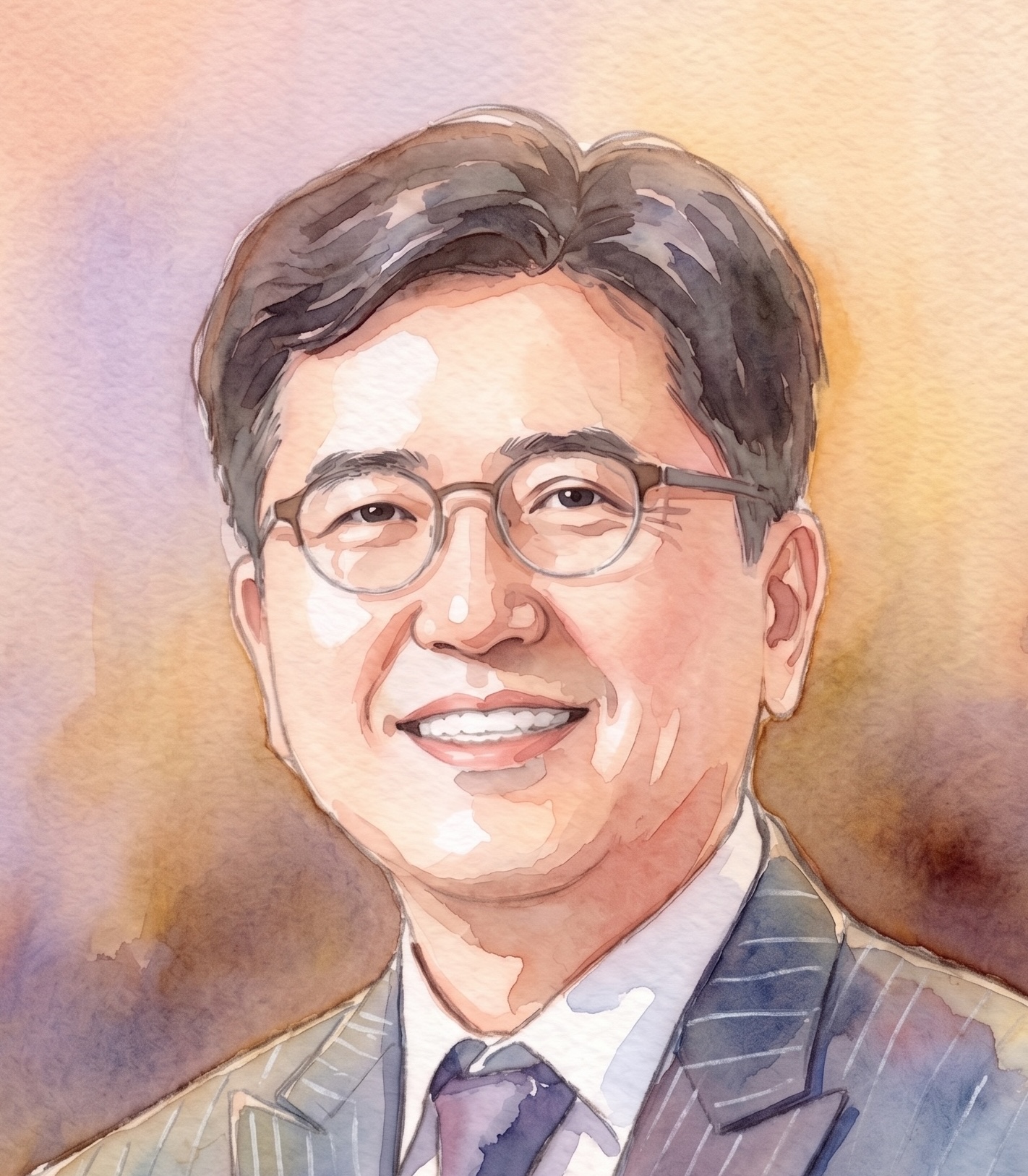
Jaejun Yu
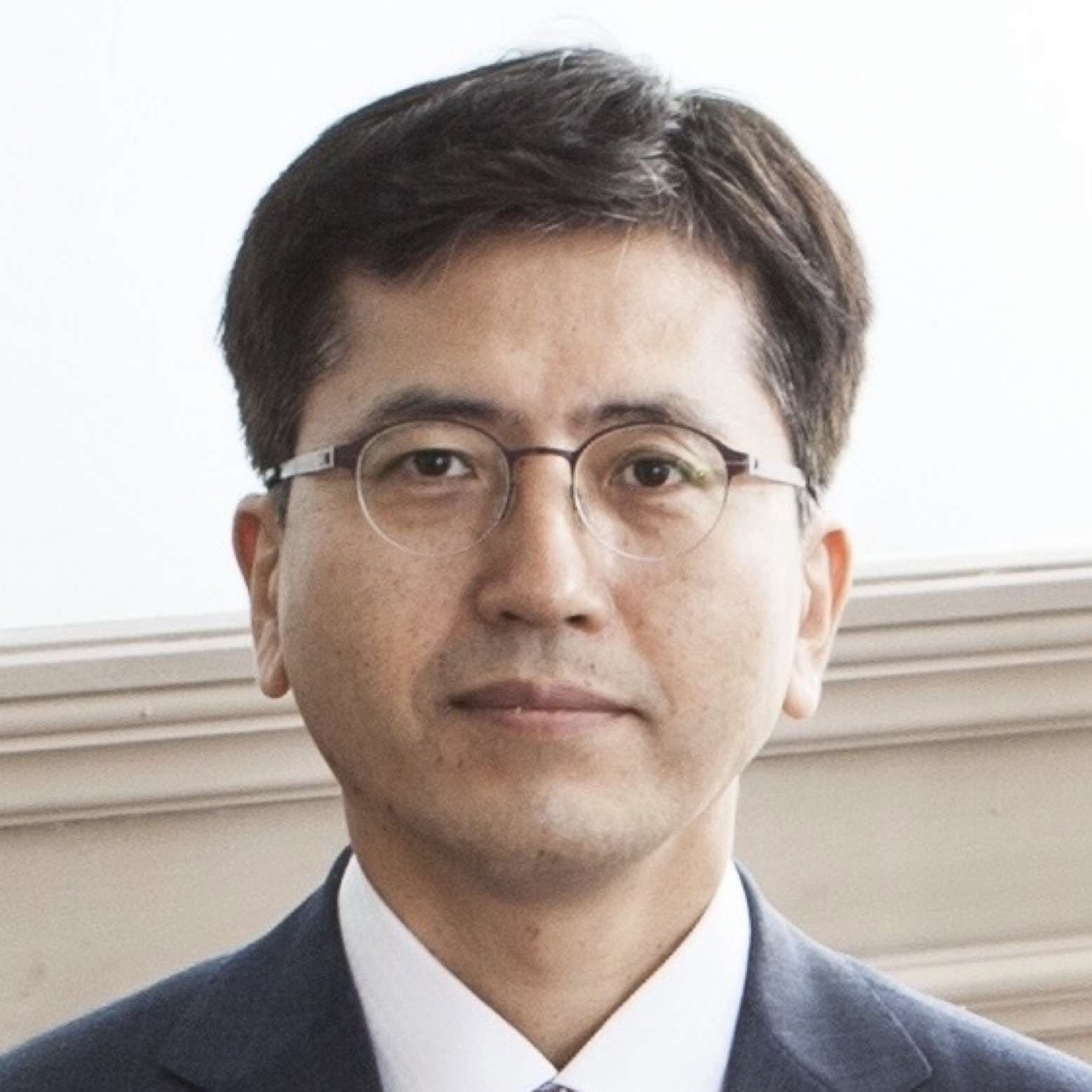
Professor of Physics
College of Natural Sciences
Seoul National University
Seoul 08826, Korea
phone: +82-2-880-6500
mail: jyu@snu.ac.kr
web: https://jyusnu.github.io/
Instagram: @jyu.snu
Profile
Jaejun Yu is Professor of Physics at Seoul National University, where he previously served as Dean of the College of Natural Sciences. He received his B.S. in Physics from SNU in 1984 and his Ph.D. in Physics from Northwestern University in 1988. As a specialist in condensed matter theory and computational science, his research focuses on the electronic structure, magnetism, and topological properties of transition metal oxides and low-dimensional materials, investigating novel physical phenomena and principles arising from strong electron–electron interactions through quantum mechanical theoretical models and computational methods.
He is the author of The Science of Curiosity, a popular science book for general readers, and has lectured widely on physics and science for non-specialist audiences. His administrative career includes service as Dean and Vice Dean of Academic Affairs at the College of Natural Sciences and as Director of the College of Liberal Education. In the latter role, he developed new computing curricula for undergraduates and advanced SNU's educational infrastructure through ICT-integrated academic administration, including a student-centered open educational information system and the eTL online learning platform.
Experience
- Professor, Department of Physics and Astronomy, Seoul National University — 1999 ~ present
- Dean, College of Natural Sciences, Seoul National University — 2022 ~ 2026
- President, National Association of Deans of College of Natural Sciences in Korea — 2022 ~ 2026
- Director, Center for Theoretical Physics, Seoul National University — 2019 ~ 2022
- Dean, Faculty of Liberal Education, Seoul National University — 2019 ~ 2022
- Visiting Scientist, MPIPKS, Dresden, Germany — 2018.01 ~ 07
- Associate Dean, Faculty of Liberal Education, Seoul National University — 2014 ~ 2016
- Treasurer, the Korean Physical Society — 2015 ~ 2016
- General Council Member, APCTP (Asia Pacific Center for Theoretical Physics) — 2014 ~ 2016
- Associate Dean for Academic Affairs, College of Natural Sciences, Seoul National University — 2012 ~ 2014
- Associate Editor, Philosophical Magazine and Philosophical Magazine Letters, UK — 2012 ~ present
- Visiting Professor, The Institute of Scientific and Industrial Research, Osaka University, Japan — 2012 Summer
- Associate Dean for Student Affairs, College of Liberal Studies, Seoul National University — 2011~2012
- Visiting (Sabbatical) Scientist, National Renewable Energy Laboratory; Colorado, USA — 2010 ~ 2011
- Principal Investigator, Center for Strongly Correlated Materials Research (CSCMR), Seoul National University — 2008 ~ 2012
- Visiting Scholar, Department of Physics and Astronomy, Rutgers University; New Jersey, USA — 2006 Summer
- Executive Editor, Journal of the Korean Physical Society (JKPS) — 2007 ~ 2007
- Assistant and Associate Professor, Physics Department, Sogang University — 1992 ~ 1999
- Research Associate, Physics Department, the University of Illinois at Urbana-Champaign; Illinois, USA — 1991 ~ 1992
- Research Associate, Physics Department, Northwestern University; Illinois, USA — 1988 ~ 1990
Committee Activities
Policy Advisory
- 2026.04–2027.12 Member, BrainLink (Outstanding Researcher Exchange Program) Operations Committee, Korea Federation of Science and Technology Societies (KOFST)
- 2025.04–2027.04 Member, Research Advisory Committee, Science and Technology Policy Institute (STEPI)
- 2025.04–2027.04 Member, Special Committee on Future Talent, National Science and Technology Advisory Council (Ministry of Science and ICT)
- 2025.02–2026.12 Member, Comprehensive Deliberation Committee for Science and Engineering Academic Research Support Programs, Ministry of Education
- 2024.06–2025.07 Member, General Advisory Committee for Science Gifted Education Policy Advancement, Korea Foundation for the Advancement of Science and Creativity (KOFAC)
Academic Committees
- 2025.11–2028.11 Board of Trustees Member, Asia Pacific Center for Theoretical Physics (APCTP)
- 2025.01–2026.12 Chair, Korea Special Committee of the Asia Pacific Center for Theoretical Physics (KPS Representative)
Education
- Seoul National University, Seoul, Korea — B.S in Physics, 1984
- Northwestern University, Illinois, USA — M.S. in Physics, 1986
- Northwestern University, Illinois, USA — Ph.D. in Physics, 1988
Awards
- Distinguished Service Award, Korean Physical Society — 2025
- SNU Awards: Excellence in Teaching, Seoul National University; Seoul, Korea — 2012
- Graduate Student Awards, 1988 MRS Spring Meeting; Reno, Nevada, USA — 1988
Books
- The Science of Curiosity: The Living World of Physics Behind Equations and Formulas (Gyedan, 2016) — APCTP Book of the Year in Science, 2017
Research Interests
Jaejun Yu’s research interests lie primarily in the condensed matter theory of strongly correlated electron materials and computational materials physics. Understanding and discovering new physical properties of novel materials, including transition metal compounds and low-dimensional systems, is particularly interesting. He is also involved in developing theoretical and computational methods and their application to study real materials' electronic and magnetic properties. Current research focuses on understanding topological band structures of novel transition metal compounds, e.g., Ir-oxides or chalcogenides, exploring new two-dimensional materials manifesting interesting topological characteristics of topological insulators, Chern insulators or fractional Chern insulators, and manipulating defects in metal oxides for p-type oxide semiconductors, catalysts, and possible device applications.
Research Highlights
citation metrics
According to Google Scholar (https://goo.gl/hT33xf), the number of citations received by his publications is more than 15,000 as of June 2026. The impact measures are the h-index of 58 and the i10-index of 151 out of 170 published papers.
The list of publications is available at https://goo.gl/hT33xf.
Selected List of publications
- B. J. Kim, Hosub Jin, S. J. Moon, J-Y. Kim, B-G. Park, C. S. Leem, Jaejun Yu, et al. "Novel Jeff= 1/2 Mott state induced by relativistic spin-orbit coupling in Sr2IrO4." Physical Review Letters 101, 076402 (2008).
- Jaejun Yu, Arthur J. Freeman, and J-H. Xu. "Electronically driven instabilities and superconductivity in the layered La2−xBaxCuO4 perovskites." Physical Review Letters 58, 1035 (1987).
- Hosik Lee, Young-Woo Son, Noejung Park, Seungwu Han, and Jaejun Yu. "Magnetic ordering at the edges of graphitic fragments: Magnetic tail interactions between the edge-localized states." Physical Review B 72, 174431 (2005).
- S. J. Moon, Hosub Jin, Kyung Wan Kim, W. S. Choi, Y. S. Lee, Jaejun Yu, G. Cao, et al. "Dimensionality-Controlled Insulator-Metal Transition and Correlated Metallic State in 5d Transition Metal Oxides Srn+1IrnO3n+1 (n=1,2, and ∞)." Physical Review Letters 101, 226402 (2008).
- S. Massidda, Jaejun Yu, A. J. Freeman, and D. D. Koelling. "Electronic structure and properties of YBa2Cu3O7-δ, a low dimensional, low density of states superconductor." Physics Letters A 122, no. 3-4 (1987): 198-202.
Research achievements
Transition metal oxides. He started his research career by publishing papers on the electronic band structures of famous high Tc Cu-oxide superconductors. The first one of the series was published in Phys. Rev. Lett. (1987) (cited more than 720 times) with Prof. A. J. Freeman at Northwestern University, which is one of the first reports on the electronic structure theory of high Tc Cu-oxides, uncovering the 2D nature of the band structure arising from the strong hybridization of Cu d and O p orbitals within the 2D square lattice of the Cu-O layer and became a solid standard of following electronic structure calculations. Later, his research evolved by building on DFT (density functional theory) calculations and elaborating model analyses for the physical properties of real materials. He has made numerous contributions to understanding novel transition metal oxides and compounds based on the DFT works. After high Tc cuprates, he continued his research on related transition metal oxide materials, including CMR (colossal magnetoresistance) manganese oxide and associated compounds, heterostructures, and superlattices of transition metal oxides. He extended his scope to the system with orbital degrees of freedom, competing with effective spin interactions and understanding spin and orbital orderings and results of optical spectroscopy in collaboration with experimental groups. He recently explored several oxide superlattices and clarified the role of oxygen vacancies in generating charge carriers at the interface of LaAlO3 overlays on the SrTiO3 (001) surface. Further, he searched for a new type of oxide semiconductors with p-type carriers, e.g., BaSnO3. He investigated the role of defects in various oxide materials with applications to electronic devices and catalysts.
Jeff=1/2 physics. Gaining experience in 3d transition metal oxides, he looked into the physics of 4d and 5d transition metal oxides, where the spin-orbit-coupling (SOC) interactions become significant and can play a crucial role in determining their electronic and magnetic properties. While moving from 3d to 4d and 5d metal oxides, the bandwidth gets broadened, and the strength of on-site Coulomb interactions becomes relatively weaker. Thus, in contrast to the insulating ground state of its 3d oxides, it is natural to expect a metallic ground state for the 4d and 5d compounds. To one’s surprise, Sr2IrO4 was reported to be insulating with an optical gap of about 0.5 eV, contrary to the metallic Sr2RhO4 of its 4d counterpart. Indeed, it remained a puzzle until he came up with a solution that the SOC combined with a moderate on-site Coulomb interaction can give rise to a new kind of entangled quantum state manifesting the spin-orbit coupled J-state with an effective angular momentum of Jeff=1/2. The idea of Jeff=1/2 was first suggested in his seminal paper on Phys. Rev. Lett. (2008) (cited more than 1,550 times) has significantly influenced various aspects of correlated electron physics with both spin and orbital degrees of freedom, such as superconductivity, quantum magnetism, topological insulators, metal-insulator transition, and so on. Recently, by expanding the idea of the spin-orbit coupled state, he has proposed that a (111)-oriented BaBiO3 bilayer sandwiched between large-gap perovskite oxides is a promising candidate for topological electronics by realizing a gap-tunable and topology-tunable system, enabling the switch between quantum spin Hall and quantum valley Hall phases.
2D materials. Magnetism in 2D materials has attracted much interest due to its potential applications to spintronics and nano-electronic devices. He has made interesting observations on atomically thin materials' charge and magnetic states during the last decade, primarily in graphene and single-layer boron nitride (BN) systems. One of his early works on graphene nanoribbon revealed the formation of local moments and their interactions at the edge of graphitic fragments—this work was published in Phys. Rev. B (2005) (cited more than 520 times) has provided a clear and lucid picture of the magnetic edge states, consequently leading to enormous activities for possible manipulation of ferromagnetic edge states for their potential applications. He has recently proposed that the charge and magnetic conditions of the transition-metal adatom on graphene or single-layer BN can be effectively controlled by either defects or external electric fields.
DFT code (OpenMX) project. In collaboration with Prof. Taisuke Ozaki at ISSP, the University of Tokyo, he has been actively involved in the development of the DFT code called OpenMX (Open source package for Material eXplorer; http://www.openmx-square.org), which is a software package for nano-scale material simulations based on DFT, aiming for the realization of large-scale ab initio electronic structure calculations. Indeed, the early development of non-collinear spin DFT code within OpenMX, incorporating both spin-orbit coupling and LDA+U, made it possible to discover the Jeff = 1/2 state in Sr2IrO4 Ir oxides. Taking advantage of its local orbital basis formulation, he developed an approach to derive effective Hamiltonians based on Wannier functions derived from DFT calculations. He utilizes this approach to analyze various materials' topological band structure and magnetism.
Academic Activities
Korean Physical Society. He served as Editor-in-Chief of JKPS (Journal of the Korean Physical Society), the KPS SCI journal, in 2007. From 2014 to 2015, as Treasurer, he modernized the society’s accounting and general operations through the adoption of cloud computing systems. From 2019 to 2020, as Chair of the Division of Condensed Matter Physics, he led the organization of international conferences and operated summer schools for the training of the next generation of researchers.
Asia Pacific Center for Theoretical Physics (APCTP). He has been involved in the planning and organization of diverse international conferences since APCTP’s founding. He served on the General Council from 2014 to 2016, and since 2025 has been a member of the Board of Trustees. He continues to be active in programs for nurturing young scientists, including the Junior Research Group (JRG) selection committee, and serves as organizing committee chair for international joint symposia.
Philosophical Magazine. Since 2012, he has served on the editorial board of this international journal, contributing to the international standing of the condensed matter physics field.
International Conferences. Since its inception in 1998, he has led the international organizing committee of the “Asian Workshop on First-Principles Electronic Structure Calculations,” which represents research groups across Asia engaged in first-principles calculations and quantum materials research. As a founding member of the “Korea–Japan–Taiwan Symposium on Strongly Correlated Electron Systems,” he has been a member of the international organizing committee since 2000. He chairs the organizing committee of the “Quantum Materials Symposium (QMS),” a leading domestic research conference in quantum materials, and served as co-chair of the organizing committee of the “International Conference on Strongly Correlated Electron Systems (SCES 2023),” held in Incheon Songdo in 2023.
- 2022–2023 Co-Chair, Organizing Committee, SCES 2023 Symposium
- 2014–present Chair, Organizing Committee, Quantum Materials Symposium (QMS)
- 2008–present Chair, International Organizing Committee, Korea–India APCTP-IACS Joint Symposium
- 2000–present Member, International Organizing Committee, Korea–Japan–Taiwan Symposium on Strongly Correlated Electron Systems
- 1998–present Member, International Organizing Committee, Asian Workshop on First-Principles Electronic Structure Calculations
Selected List of Conference Activities
- Asian Workshop on First-Principles Electronic Structure Calculations, 1998 - present,
serving for 19 years as a core member of the International Organizing Committee, contributing to the DFT community in east Asian countries for the computational condensed matter physics and materials sciences. - Korea-Japan-Taiwan Symposium on Strongly Correlated Electron Systems, 2000 - present,
serving for 17 years as a core member of the International Organizing Committee, contributing to promoting strongly correlated electron physics in the physics community in Korea, Japan, and Taiwan. - APCTP-IACS (Korea-India) Joint Symposium on Emergent Phenomena in Novel Oxide Materials and Low Dimensional Systems, 2008 - present,
serving for 14 years as a convener of the bilateral symposium to promote scientific activities and exchange programs among the physics communities of Korea and India. - APCTP-QMS (Quantum Materials Symposium), 2014 - present
serving as a core member of the Organizing Committee and now as an organizing chair contributing to the condensed matter physics community, especially of strongly correlated electron materials, in Korea. - International Conference on Strongly Correlated Electron Systems (SCES) 2023, 2022 - 2023, serving as a co-chair of the Conference, which will be held in Incheon, Korea, from 2nd to 7th July 2023.